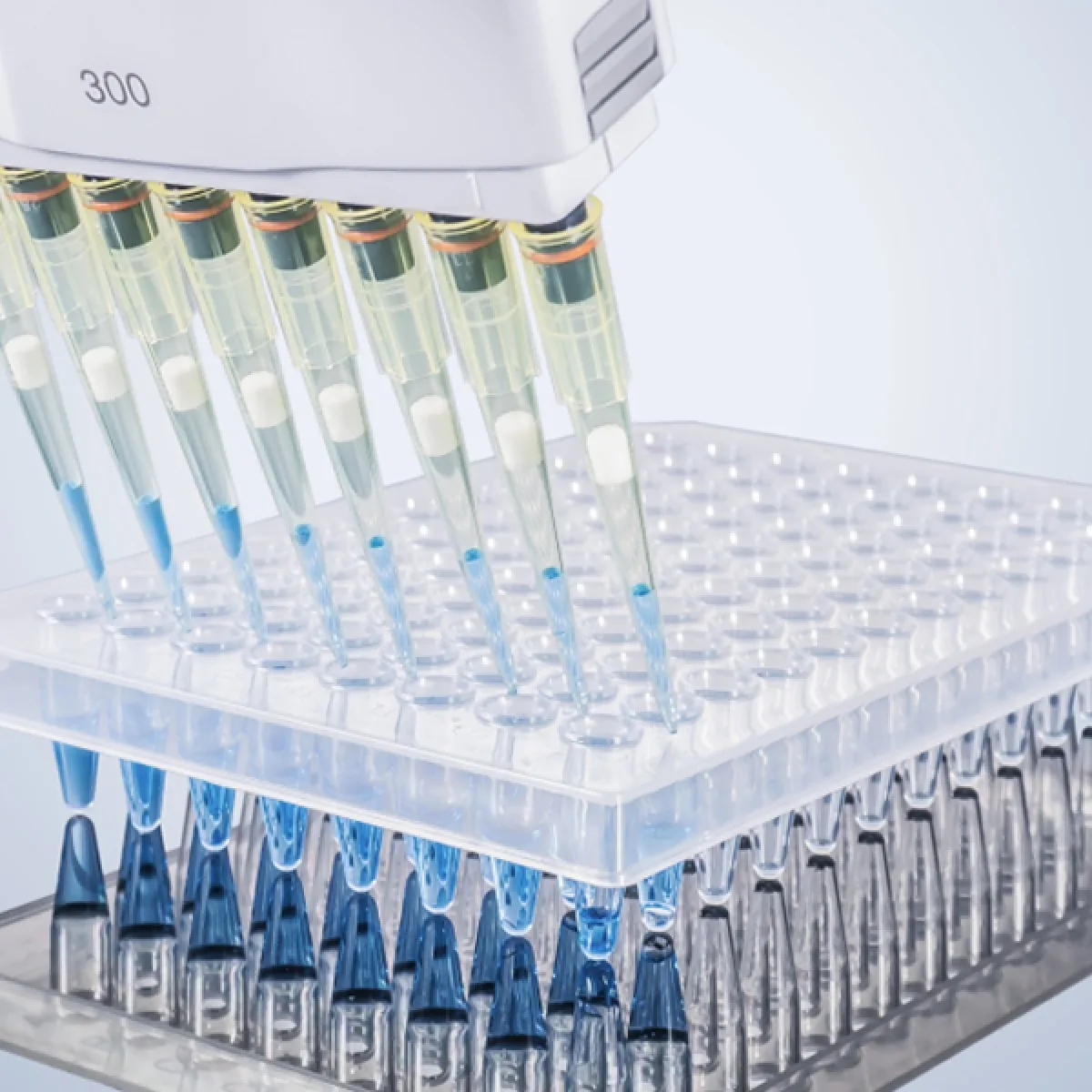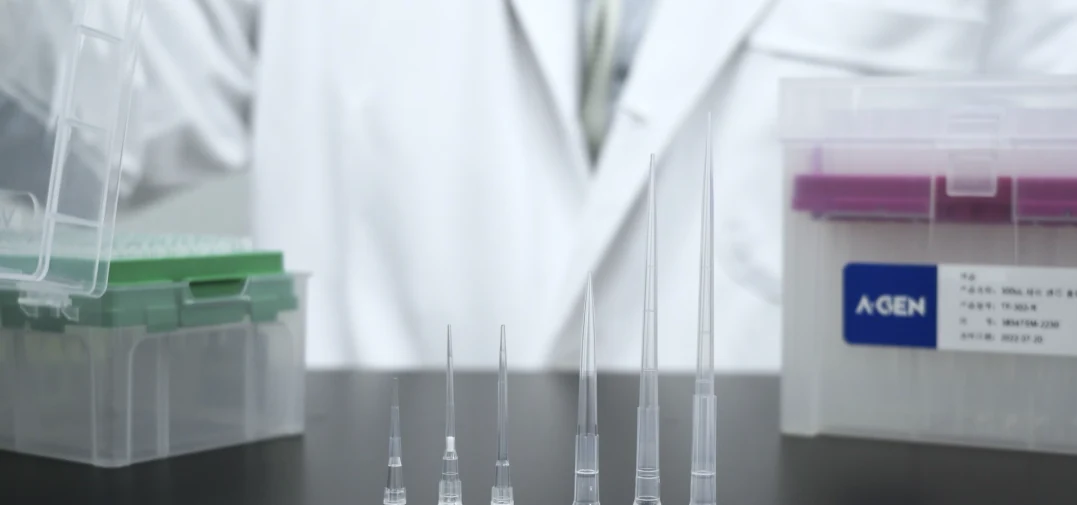
Choose a pipette tip by treating volume and length as two separate questions. Capacity must cover the intended aspiration without wetting a filter or overfilling the tip. Length must let the tip reach the liquid while keeping the pipette shaft away from the vessel and without forcing excessive immersion.
Neither number is sufficient by itself. The exact tip must also seal on the pipette, eject correctly, fit the vessel, and pass a check under the actual liquid-handling conditions. The following process turns “What tip size do I need?” into a documented selection decision.

1. Start with the pipette, not the sample volume
Record the pipette manufacturer, model, channel count, and adjustable range. A tip marked 200 µL may have enough nominal capacity for a 100 µL transfer, but that does not prove that its collar geometry will seal on a particular pipette.
Use the pipette manufacturer's approved tip range or a supplier's model-specific compatibility information as the first screen. “Universal” describes a product family; it should not be read as a guarantee of fit across every pipette model and generation.
A-GEN's universal pipette tip family presents multiple volume and format options, including extended-length and large-capacity tips. Use the family page to identify candidate formats, then confirm the exact catalog item against the laboratory's pipette before qualification.
2. Match the working volume, not only the maximum volume
The selected pipette and tip should both cover the transfer volume. In routine air-displacement pipetting, a smaller suitable pipette and tip generally create a smaller air cushion than an oversized setup. That can make the system less sensitive to air expansion and compression.
For example, a 100 µL transfer should not automatically be assigned to the largest pipette and tip available. Check whether a lower-range pipette covers the method and whether its matching tip has adequate capacity. Follow the instrument manufacturer's limits rather than applying a single percentage rule to every model.
Also distinguish the set volume from the total liquid that may enter the tip. Reverse pipetting intentionally aspirates more than the delivered volume. Pre-wetting, multidispensing, or a programmed overage can also change the required headroom. If a filter tip is used, the filter occupies part of the internal space and must not be wetted.
3. Read “capacity” as a selection limit, not a fill target
A tip's stated capacity helps define its intended range, but filling close to the top is not a goal. Liquid entering the cone or reaching a filter can contaminate the pipette and disrupt the transfer.
Before approving a tip, answer four questions:
- Is the transfer within the pipette's operating range?
- Does the exact tip have enough usable capacity for the selected technique?
- Is there safe clearance below the filter, if present?
- Does the liquid remain stable during aspiration, the pause, movement, and dispensing?
The current A-GEN standard pipette tips specification list can be filtered by listed volume and shows long, short, filtered, non-filtered, racked, and bagged item descriptions. Use those fields to build a shortlist, but verify the selected catalog number rather than ordering from the volume label alone.
4. Choose length from vessel access and contamination risk
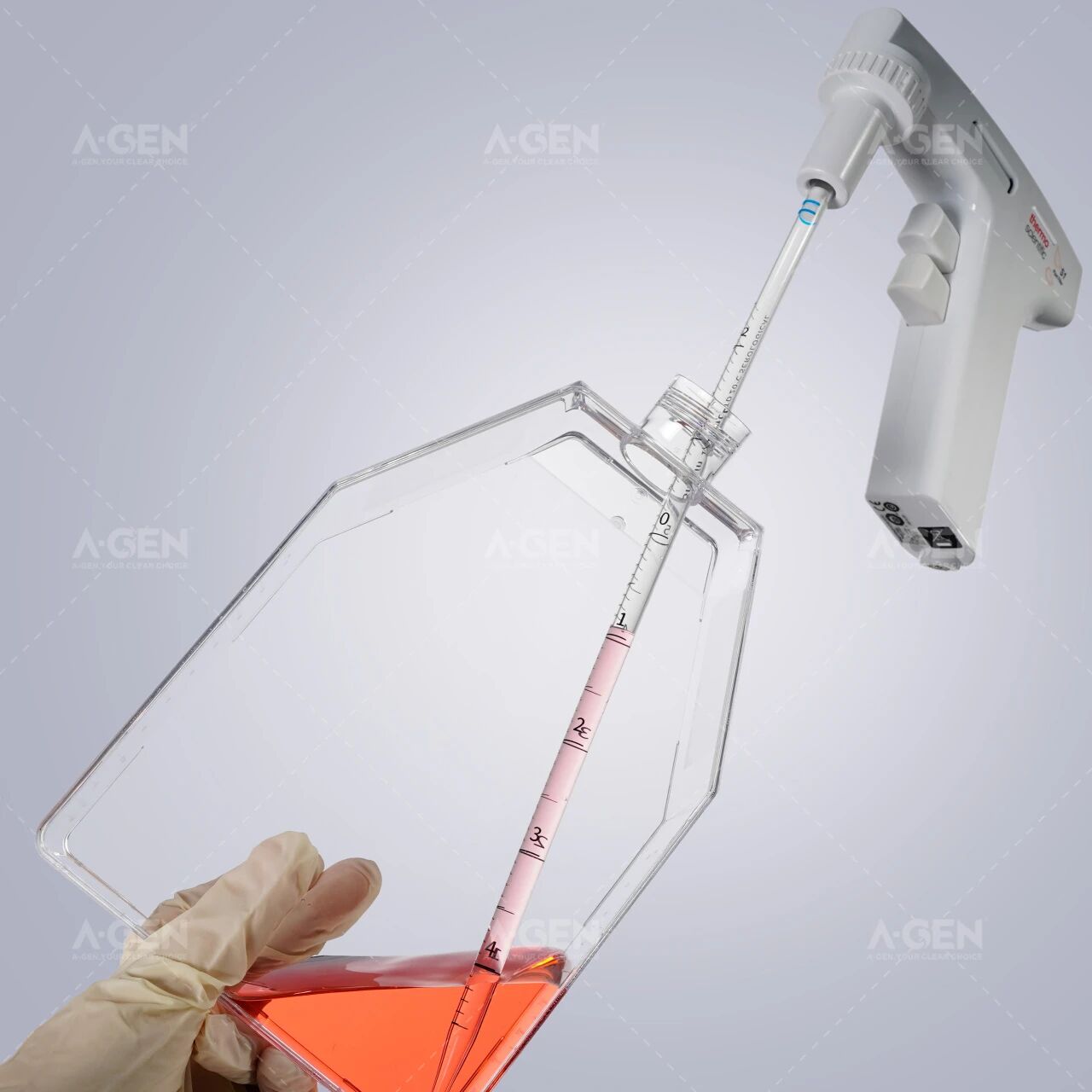
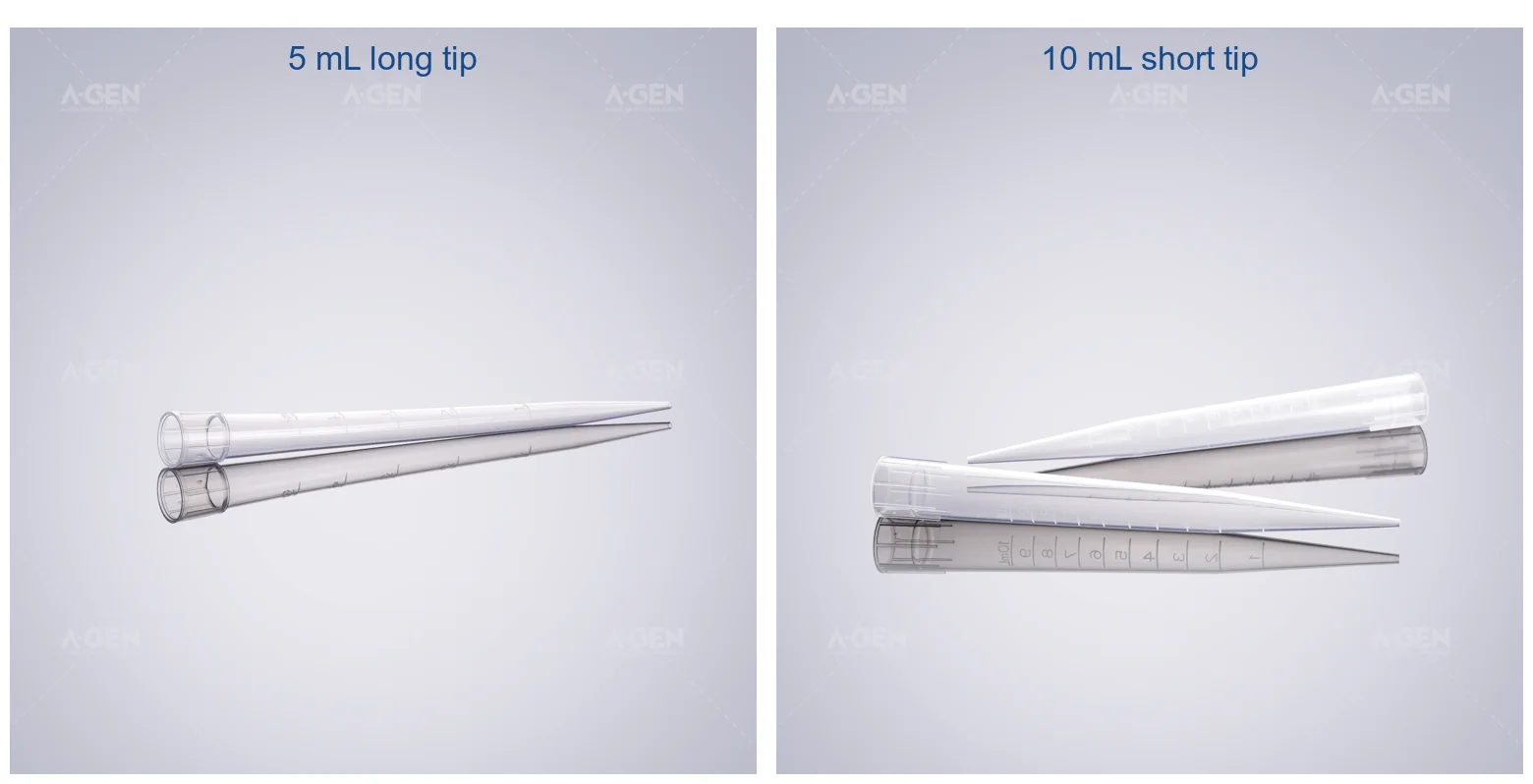
Standard-length tips suit many tubes, plates, and reservoirs when the liquid surface is easy to reach. An extended-length tip becomes useful when the liquid is below a narrow neck or deep inside a tube, bottle, deep-well plate, or other vessel.
The practical objective is to reach the liquid without letting the lower pipette body touch the vessel rim or inner wall. Shaft contact can carry material between vessels and may make the working angle inconsistent. A longer tip can increase clearance, but only if it still fits the pipette and the vessel opening.
Do not choose the longest tip by default. Additional length can affect access, handling, rack clearance, dead volume, and the ease of controlling immersion depth. In multichannel work, confirm that all tips can enter the target wells without contacting the plate or bending.
5. Separate tip length from immersion depth
Tip length describes the consumable. Immersion depth describes how far the tip enters the liquid during aspiration. A long tip does not justify immersing more of it.
The tip should be deep enough to avoid drawing air but not unnecessarily deep. Excessive immersion increases the liquid head around the opening and can leave liquid on the outside of the tip. Very shallow immersion can draw air as the liquid level falls. The correct depth and pause depend on the volume, vessel, liquid, and pipette instructions.
For repeatable work, specify the aspiration angle, approximate immersion depth, aspiration speed, and pause in the method. Reassess them whenever tip geometry or vessel format changes.
6. Check the vessel before committing to a longer tip
Measure or confirm the vessel opening, internal depth, bottom geometry, and working liquid level. A tip may be long enough to reach the bottom but too wide at the collar to enter the neck. A narrow tip may reach a conical tube but still be unable to access the last portion of liquid without tilting.
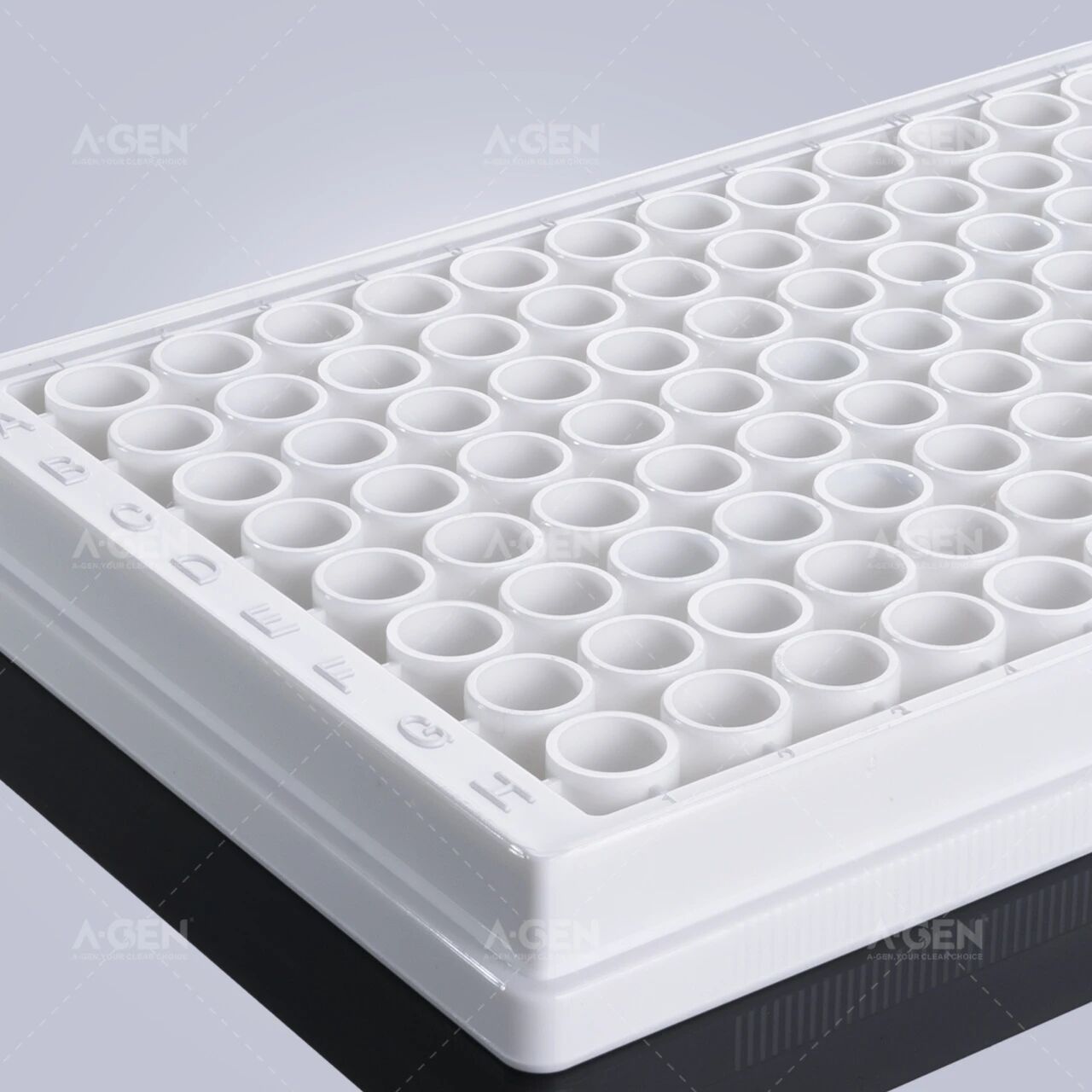
For plates, check well pitch and rim clearance as well as depth. For reservoirs, consider how the liquid level changes across the run. For capped tubes, confirm that the open cap does not interfere with the pipette body or multichannel alignment.
The selection target is controlled access to the working liquid level, not physical contact with the vessel bottom. Bottom contact can block the opening or damage the tip.
7. Account for liquid behavior
Viscous liquids need more time to enter and leave the tip. Volatile liquids can expand in the air cushion. Foaming solutions may trap bubbles, while surfactant-containing liquids may leave a film. These behaviors can change how much headroom and pause time are practical.
An extended tip solves an access problem, not a liquid-property problem. A larger-capacity tip also does not automatically improve transfer of a difficult liquid. Evaluate pre-wetting, slower aspiration, reverse pipetting, low-retention surfaces, wide-bore tips, or positive-displacement equipment only where they suit the liquid and the instrument instructions.
8. Qualify the exact combination
Shortlist by pipette fit, capacity, and length, then test the exact catalog item. Keep the pipette, liquid, target volume, vessel, operator method, and environmental conditions controlled while comparing candidates.
Document:
- pipette manufacturer, model, channel count, and service status;
- tip supplier, catalog number, lot, filter status, and packaging;
- target and aspirated volumes, including any overage;
- vessel type, working liquid level, and access clearance;
- mounting, seal, ejection, and visible liquid behavior;
- delivered-volume results using the laboratory's accepted verification method.
A tip that works at one volume in one vessel is not automatically qualified for the full pipette range. Test the volumes and workflows that matter to the method, including low and high operating points when relevant.
A practical selection matrix
| Method condition | Volume decision | Length decision | Confirm before use |
|---|---|---|---|
| Small transfer in an open microtube | Use the smallest suitable pipette-tip system with adequate headroom | Standard length may be sufficient | Exact pipette fit and low-volume performance |
| Liquid below a narrow tube neck | Capacity must cover the technique, including any overage | Extended length may reduce shaft-to-vessel contact | Tip can enter the neck without bending or bottom contact |
| Deep-well plate | Match transfer volume and programmed aspiration | Long format may improve access | Well pitch, depth, multichannel alignment, and clearance |
| Reverse pipetting | Allow for aspirated volume above the delivered volume | Choose by vessel access | Filter clearance and retained excess volume |
| Filtered tip | Do not treat nominal capacity as liquid space up to the filter | Standard or extended according to vessel | Liquid remains below the filter throughout the cycle |
| Large-volume transfer | Match both the large-volume pipette and exact tip | Long or short depends on pipette model and vessel | Model-specific fit, vessel opening, stability, and pause time |
Common selection mistakes
“The sample is 200 µL, so any 200 µL tip will work.”
Capacity does not prove pipette fit, usable headroom, vessel access, or method performance.
“A longer tip is always cleaner.”
It may reduce shaft contact in a deep vessel, but only when the geometry and technique are appropriate. Unnecessary length can complicate access and control.
“A 1,000 µL tip is safer because it has more space.”
Oversizing the complete pipette-tip system can increase the air cushion and may be unsuitable for a low-volume method. Choose within the intended working range.
“The filter protects the pipette, so filling near it is acceptable.”
The filter should not be wetted. Account for the filter's occupied space and any extra aspirated volume.